 Reviews



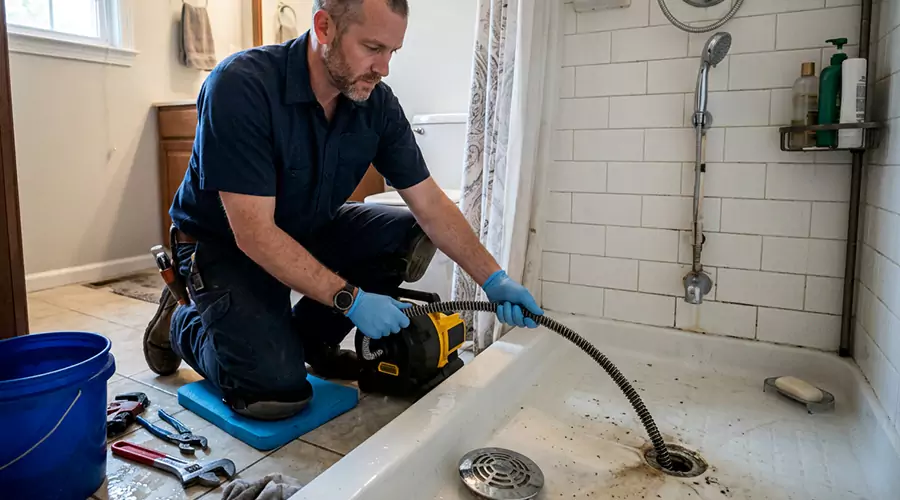
To unclog a drain, identify the affected fixture and remove accessible debris before using a plunger or drain snake. Most ordinary household blockages can be approached with basic mechanical tools. Professional drain cleaning averages approximately $246 in the United States according to August 2026 pricing data.
Different drains collect different types of material. A shower often collects hair while kitchen drains are more likely to contain grease. Toilet blockages involve another set of conditions and require a different type of plunger.
The best approach is to match the clearing method to the fixture instead of treating every drain identically.
What Causes Household Drains to Clog?
Household drains clog when accumulated material restricts the pipe opening. The type of blockage depends on what normally enters the fixture. Understanding that difference helps determine which tool is likely to work.
Common causes include:
- Hair and soap residue inside bathroom drains.
- Food particles collecting in kitchen plumbing.
- Cooking grease coating drainpipe surfaces.
- Excess toilet paper or unsuitable materials inside toilet drains.
- Small objects trapped inside fixture-level plumbing.
- Accumulated debris farther into a shared drainage line.
The EPA advises keeping grease and other unsuitable materials out of household drainage systems. Preventing material from entering a drain is easier than removing buildup later.
Which Drain Clearing Method Should You Use?
The appropriate clearing method depends on the fixture and obstruction. Removing visible hair is a direct solution for many bathroom clogs. A plunger can move soft nearby blockages. A drain snake reaches farther when the obstruction sits deeper.
| Drain Type | Typical Obstruction | Suitable Initial Method |
|---|---|---|
| Bathroom sink | Hair near stopper | Manual hair removal |
| Kitchen sink | Food or grease buildup | Strainer cleaning |
| Shower | Hair beneath drain cover | Flexible hair-removal tool |
| Bathtub | Hair near stopper | Stopper inspection |
| Toilet | Waste or excess paper | Flange toilet plunger |
| Deeper branch drain | Accumulated debris | Manual auger |
These methods work best when the blockage is limited to one fixture. Multiple affected drains can indicate a deeper restriction.
How Does a Drain Clog Progress?
Most drain blockages develop gradually. Material begins collecting inside the pipe and reduces the available opening. Water then drains more slowly before a larger blockage stops normal flow.
| Stage | Typical Symptom | Recommended Response | 2026 Cost Consideration |
|---|---|---|---|
| Early buildup | Slightly slower drainage | Clean accessible components | Usually DIY |
| Partial restriction | Pooling water | Use an appropriate mechanical tool | Usually DIY |
| Severe blockage | Standing water | Investigate deeper obstruction | 147–352 for typical professional cleaning |
| Shared drainage problem | Several fixtures affected | Wider plumbing investigation | May cost more |
The figures represent reported U.S. cleaning costs rather than fixed prices for every household.
What Warning Signs Suggest a Serious Drainage Problem?
A serious drain blockage affects more than drainage speed. Changes in other fixtures can help identify whether the restriction is local or part of a larger plumbing problem.
Watch for these signs:
- Water pools during normal fixture use.
- Drainage becomes progressively slower.
- A drain repeatedly gurgles.
- Unpleasant odors accompany standing water.
- A blockage returns soon after clearing.
- Several fixtures begin draining slowly.
- Wastewater enters a low fixture such as a shower.
- Water backs up when another appliance operates.
- A manual auger cannot restore flow.
- The drain stops moving water completely.
A blockage affecting several connected fixtures should not be treated as an ordinary surface clog.
How Do You Unclog a Drain With a Plunger?
A plunger can move many nearby soft blockages by creating alternating pressure inside the drain. The plunger must match the fixture and form an effective seal.
For sinks or other suitable flat drain openings:
- Remove excessive standing water.
- Leave enough water to cover the rubber cup.
- Seal any connected overflow opening where applicable.
- Center the plunger over the drain.
- Begin with gentle pressure.
- Use controlled pushing and pulling movements.
- Check drainage after approximately 20 to 30 seconds.
Toilets require a flange-style toilet plunger. The extended flange fits into the toilet outlet and helps create a seal.
Do not use the same plunger interchangeably between toilets and food-preparation sinks.
How Do You Unclog a Drain With a Snake?
A manual drain snake is useful when the blockage sits beyond the reach of a plunger or surface cleaning tool. The flexible cable follows the drainage pipe and can capture or disturb accumulated material.
Use controlled movements:
- Remove accessible covers or stoppers.
- Insert the cable into the appropriate drain opening.
- Advance slowly while rotating the handle.
- Stop when resistance becomes noticeable.
- Work the cable gently against the obstruction.
- Withdraw the cable carefully.
- Remove captured debris.
- Test drainage after the tool has been removed.
The keyword snaking a drain describes this deeper mechanical method. Avoid forcing the cable against a rigid stop. Pipe bends and unsuitable access points can make the tool difficult to control.
Can Household Products Help Unclog a Drain?
Household cleaning products may help with minor residue in a drain that still moves water. They are much less useful for solid objects or dense hair buildup.
For ordinary physical obstructions, mechanical removal offers several advantages:
- It removes accessible material rather than relying on chemical reactions.
- It provides direct evidence of what caused the blockage.
- It reduces the risk of incompatible chemicals remaining inside the pipe.
- It allows the drain to be tested immediately after clearing.
Never mix chemical cleaning products. The CDC warns that mixing bleach with other cleaners can release dangerous vapors.
How Can You Identify a Deeper Drain Blockage?
A deeper blockage becomes more likely when several fixtures react together or the individual fixture's accessible plumbing is already clear. For example, a shower that backs up when a nearby toilet flushes may be experiencing a restriction farther downstream. Check which fixtures are affected. Record whether the problem appears during normal use or when another appliance drains. Do not continue sending water into the plumbing if wastewater is already returning through another fixture.
When Should You Call a Professional?
Professional help is appropriate when household mechanical tools cannot clear a blockage or several fixtures become affected. Repeated drain problems can also indicate a restriction beyond the accessible fixture plumbing.
Professional drain cleaning costs $147 to $352 in 2026 according to current U.S. data. The reported average is $246.
Professional evaluation is reasonable when:
- Several drains are blocked simultaneously.
- Wastewater returns through a shower or bathtub.
- A manual auger cannot restore drainage.
- The same obstruction returns repeatedly.
- Accessible pipes appear damaged.
- Drainage problems extend beyond one bathroom or kitchen fixture.
A professional can inspect the location of the blockage and determine whether longer mechanical equipment is required.
How Can You Prevent Household Drain Clogs?
Prevention depends on keeping unsuitable material out of each fixture. A kitchen drain needs protection from grease. Bathroom drains benefit from hair-catching screens and regular stopper cleaning.
Practical maintenance includes:
- Install suitable drain strainers.
- Remove captured hair regularly.
- Keep cooking grease out of kitchen drains.
- Dispose of food residue in the trash.
- Avoid flushing inappropriate materials.
- Watch for changes in drainage speed.
- Address small restrictions before they become complete blockages.
These habits are inexpensive compared with repeated professional drain cleaning.
Conclusion
To unclog a drain, start by identifying which fixture is affected and what material is likely causing the obstruction. Remove accessible debris before using stronger tools. A suitable plunger works on many nearby soft blockages, while a manual auger reaches deeper material. If several fixtures back up together, the restriction may require professional investigation. Check the drain screens in your home this week and remove accumulated debris.
Frequently Asked Questions
What is the quickest way to unclog a drain?
Remove visible debris first. A suitable plunger may clear a nearby soft blockage quickly.
Can every drain be cleared with the same tool?
No. Different fixtures require different plungers and access methods.
Why does my drain clog repeatedly?
Part of the previous obstruction may remain. The pipe may also contain a deeper restriction.
Can hot water remove a drain clog?
Hot water may rinse light residue. It cannot reliably remove solid objects or dense hair buildup.
Why are several household drains clogged together?
A shared branch or main drainage line may contain the obstruction.